

At its simplest, price is an agreement between buyer and seller. Suzan Schwartz McDonald, former Vice President of Booz Allen & Hamilton, makes the definition rather more sophisticated: “Pricing is a kind of intellectual negotiation process with very close ties to brand positioning.” A negotiation that mostly takes place subconsciously and is fed by emotion.
Price is one of the most flexible parts of the marketing mix. You cannot change a product's features or image, its sales channels, customer service processes or communication strategy as quickly as you can change its price. At the same time, because it directly affects revenue and profitability, price is on everyone's radar — with a direct effect on product and brand image on top of that.
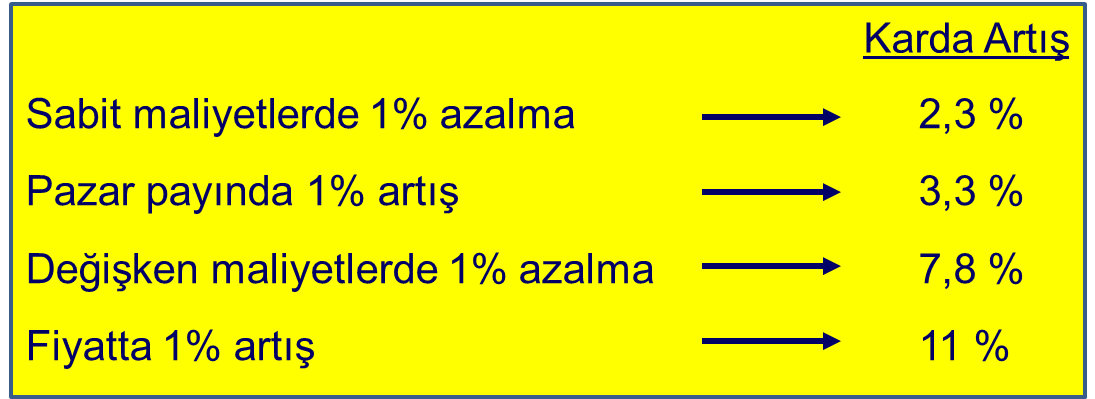
Research shows that pricing strategies have a major effect on a company's profitability. In their book *Smart Pricing*, published in 2010, Professor Jagmohan S. Raju and Professor Z. John Zhang report a study conducted with 2,400 companies. According to it, a 1% increase in price has a more positive effect on profitability than a 1% reduction in fixed or variable costs or a 1% increase in market share.
This is why determining the highest price customers are willing to pay matters so much. Different price levels create different demand and different effects on company objectives. The degree of sensitivity that the target audience's demand for a product or service shows to price changes is called the “price elasticity of demand”. Known among marketers by the shorter term “price sensitivity”, it is essentially an X–Y representation of how demand changes as price rises (see Figure 1). The steeper the slope in such representations, the greater the price sensitivity.

For such an important element of the marketing mix, market research offers a range of solutions. The main objective of pricing studies is, naturally, to determine the right price. That price must maximise profit without putting existing business at risk, while also providing an advantage over competitors. Below I have tried to summarise some of the techniques used in pricing research and their constraints:
• PSM — Price Sensitivity Measurement
Developed by the Dutch economist Peter van Westendorp, this technique is quick and easy to design. It can be analysed rapidly. It is therefore inexpensive and can be added to other studies. In this technique, which uses four simple questions and a 17-step (sometimes 31-step) price scale with the expected price at its midpoint, it is important that consumers are informed about price levels in the relevant category.
For this reason PSM should be used to find the right price rather than to measure price sensitivity. PSM also gives no information about the consumer values that influence the purchase decision.
• Gabor-Granger
Developed by the economists Gabor and Granger, the main principle of this technique is to test a product or service at different prices (each price separately) and observe purchase intent at each price level. Unlike PSM, prices here are set in advance, and it is assumed that at least one of the separately tested prices will be accepted by the target audience. This technique also proceeds on the assumption that consumers know the price levels in the market.
It forces you to explain changes in product price with a single variable only. It does not allow you to observe the effect of a product's different attributes on price. Research conducted with the Gabor-Granger technique only helps determine whether the price offered is acceptable. It may fall short in determining the right price level.
• Conjoint analysis
Conjoint analysis is a market research technique for measuring the attributes (features, variables, factors) effective in shaping consumer preference, together with their priorities. It makes it possible to understand how respondents form their preferences for a product or service. Alongside simple applications such as BPTO (Brand Price Trade Off), which looks only at the balance between price and brand (product/service), there are also advanced applications that examine price together with ideal product design. The simulation programme produced at the end of the study makes it possible to see what demand would be at different price levels.
Because consumers have been observed to behave more price-sensitively in studies where only price is varied than they do in real life, it is important to seek expert support in interpreting the figures. As the study asks customers to choose between two or more options, it should be borne in mind that customers may exercise their right to say “I would not buy any of these at these prices”.
When measuring the relationship between price and demand, it should not be forgotten that many factors can affect demand, and these should be kept under control as far as possible. For example:
• The absence of an equivalent product
• Very high or very low disposable income among the target audience
• Competitors' counter-moves
• Changes to other elements of the marketing mix alongside price